

Smart Digital Locks Are Redefining Home Security Standards in 2026
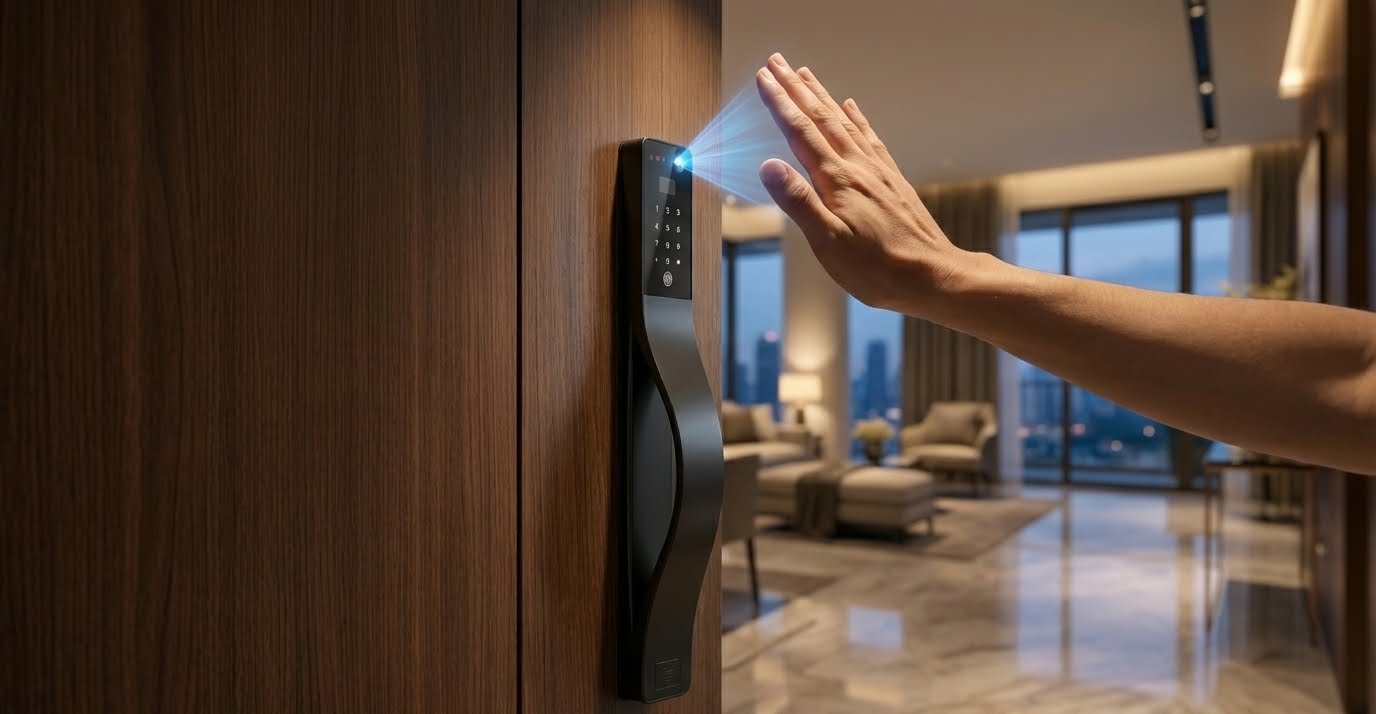
Palm vein recognition demonstrated on a smart digital lock installed on a residential door, showcasing contactless biometric access technology.
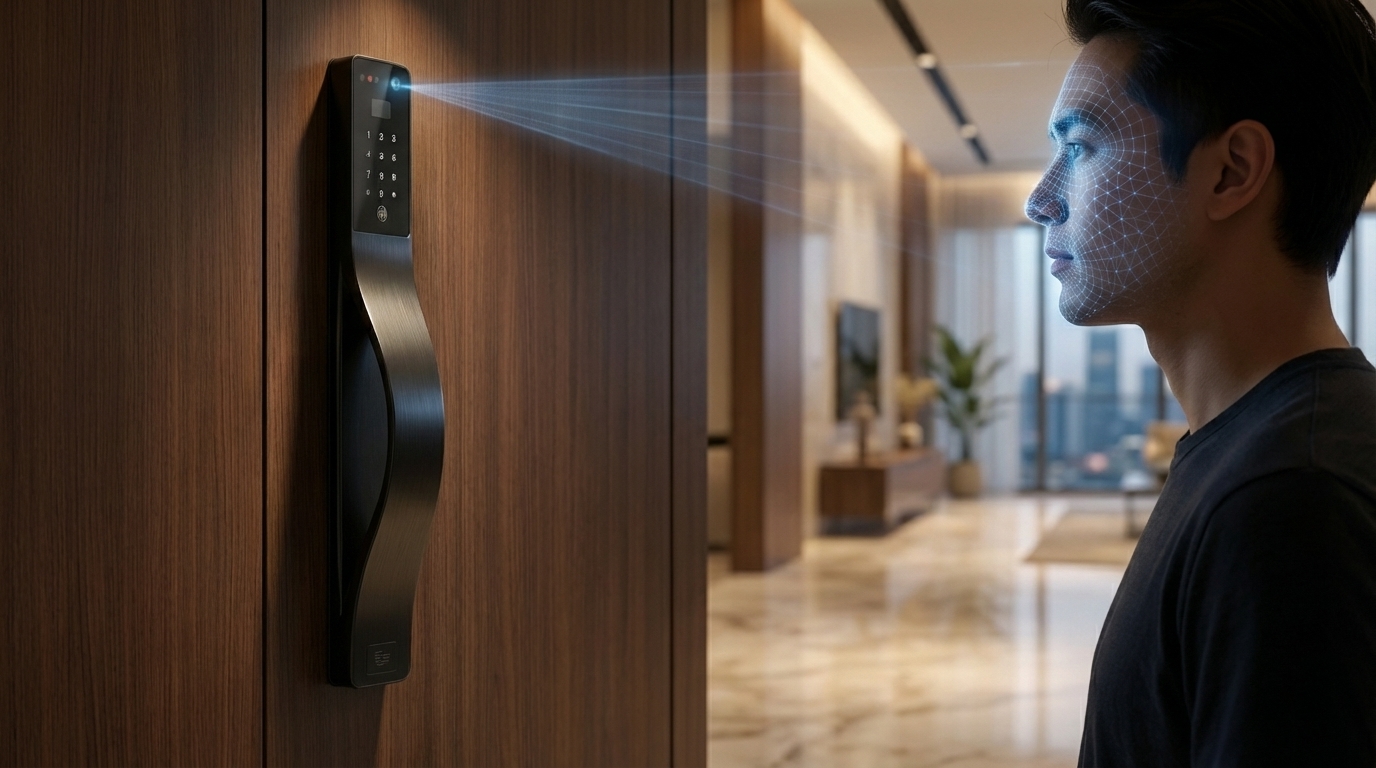
Facial recognition access demonstrated on a digital door lock installed on a residential door, highlighting advanced identity-based entry systems.
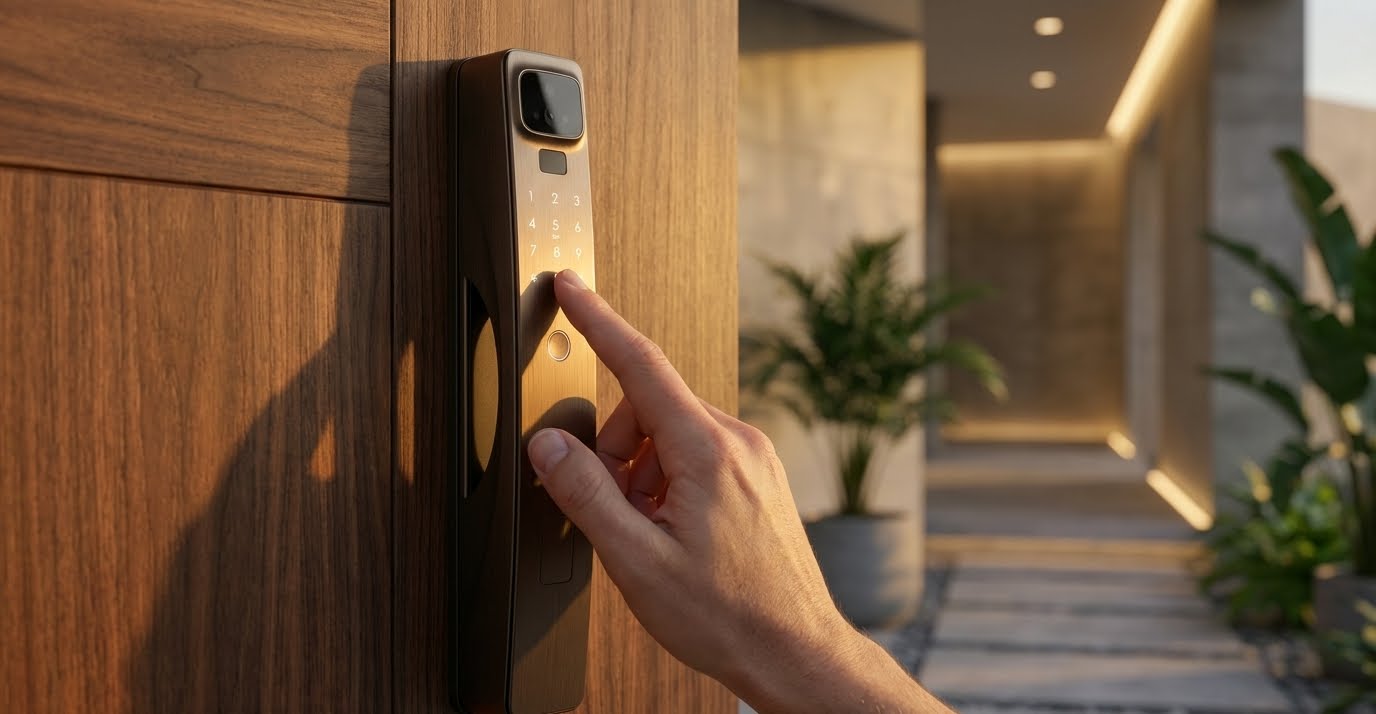
Digital door locks from the Interlock Mercury Series installed in a residential setting, designed for modern access control and reliability.
New insights into how smart digital locks, biometric access, and connected door security systems are reshaping modern homes worldwide.
SINGAPORE, January 9, 2026 /EINPresswire.com/ -- Smart digital locks are rapidly redefining how homeowners approach residential security in 2026. Once perceived mainly as a convenience upgrade, digital door locks are now increasingly recognised as a core layer of home security—integrating advanced authentication, connected technologies, and modern access control into everyday living environments.
The global shift toward smart homes has accelerated adoption of smart digital locks, driven by urbanisation, higher security expectations, and the inherent limitations of traditional mechanical locking systems. Physical keys can be lost, duplicated, or compromised without detection, while conventional locks offer little to no visibility into access activity. In contrast, digital door locks introduce identity-based access, giving homeowners greater control, accountability, and adaptability.
Modern smart digital locks authenticate users using secure access methods such as fingerprint recognition, PIN codes, mobile credentials, and encrypted proximity-based technologies. These systems allow homeowners to define who can enter a property, specify access time windows, and revoke credentials instantly when needed. This represents a broader shift from object-based security toward user-centric protection, where access is tied directly to verified identity rather than a physical key.
Biometric authentication has emerged as one of the most transformative developments in digital door lock technology. Early biometric systems often struggled with reliability or raised concerns about spoofing. Today’s solutions incorporate advanced sensors, liveness detection, and on-device processing that significantly improve both accuracy and privacy. Fingerprint recognition, in particular, has matured into a fast and dependable access method suitable for high-frequency residential use.
Beyond biometrics, ultra-wideband (UWB) technology is increasingly shaping the next generation of digital door locks. Unlike conventional Bluetooth systems that rely on signal strength, UWB provides precise distance and directional awareness. This allows doors to unlock only when an authorised user is physically approaching the door from the correct direction, greatly reducing accidental unlocks and helping to mitigate relay-based attacks. As security threats evolve, UWB is becoming an important benchmark for secure proximity access.
Interoperability has also become a defining requirement for modern digital door locks. Homeowners now expect locks to function as part of a broader smart home ecosystem rather than as isolated devices. Support for emerging standards such as Matter and Thread enables digital door locks to integrate seamlessly with lighting, cameras, alarms, and automation platforms across multiple ecosystems. This interoperability protects homeowners from rapid obsolescence as smart home standards continue to evolve.
The adoption of digital door locks has expanded beyond early adopters to include a wide range of residential environments, from apartments and condominiums to landed homes and mixed-use developments. This has driven manufacturers to prioritise adaptable hardware design, compatibility with different door materials, and support for region-specific installation requirements. As a result, modern digital locks are increasingly engineered to perform reliably across diverse use cases rather than a single housing type.
Installation quality remains a critical but often overlooked factor in digital lock performance. Even the most advanced smart digital locks can underperform if improperly installed or misaligned. Issues such as inconsistent biometric recognition, mechanical resistance, or premature wear are often the result of poor installation rather than product limitations. As awareness grows, homeowners are placing greater emphasis on suppliers that combine technical expertise with professional installation, calibration, and after-sales support.
Long-term reliability is another key consideration influencing purchasing decisions in 2026. Unlike traditional locks that can function for decades with minimal intervention, digital door locks require thoughtful design around power management, emergency access, and fail-safe operation. Features such as low-power optimisation, backup access methods, and emergency charging ports have become essential components of dependable smart lock design, ensuring access continuity even during unexpected situations.
The Interlock Mercury Series reflects this shift toward practical, real-world performance in digital door lock development. Rather than focusing exclusively on headline features, modern lock series are increasingly designed around balanced performance—combining security, usability, durability, and maintainability. This approach acknowledges that residential security systems must operate reliably under daily conditions, not just in controlled testing environments.
Another defining advantage of smart digital locks is access transparency. Unlike mechanical locks, digital systems provide activity logs that record access attempts, successful unlocks, and usage patterns. This visibility enables homeowners to monitor entry behaviour, verify access times, and identify irregular activity. Such features are particularly valuable for families, rental properties, and shared living spaces where multiple users require controlled access.
Privacy and data security have also moved to the forefront of smart lock design as connectivity increases. Leading smart digital locks now emphasise local data processing over constant cloud dependency. By storing biometric data and access credentials securely on the device itself, these systems reduce exposure risks while maintaining fast response times. This privacy-first approach aligns with growing global expectations around data protection and digital trust.
In addition to individual homeowners, digital door locks are increasingly being adopted in professional and semi-commercial residential contexts. Property managers, serviced apartments, and shared accommodations are leveraging smart locks to streamline access management, reduce operational overhead, and improve accountability. These use cases further underscore the role of digital locks as infrastructure rather than novelty devices.
“Smart digital locks are no longer optional upgrades; they are becoming foundational components of residential security,” said a spokesperson from Interlock Singapore. “Homeowners today expect identity-based access, transparency, and systems that are designed for long-term reliability rather than short-term convenience.”
The evolution of digital door locks closely mirrors broader trends in residential technology. As homes become more connected, security systems must integrate seamlessly into daily routines while remaining resilient against emerging threats. This has shifted development priorities toward robust authentication, fail-safe design, and future-ready connectivity standards.
Looking ahead, smart digital locks are expected to play an increasingly central role in how homes are secured, managed, and accessed. As biometric technologies mature, UWB adoption expands, and smart home standards stabilise, digital door locks will remain at the forefront of residential security innovation—bridging the gap between physical protection and intelligent, user-driven control.
Dean Po
Interlock Singapore
+65 9680 4569
email us here
Visit us on social media:
LinkedIn
Instagram
Facebook
YouTube
TikTok
Legal Disclaimer:
EIN Presswire provides this news content "as is" without warranty of any kind. We do not accept any responsibility or liability for the accuracy, content, images, videos, licenses, completeness, legality, or reliability of the information contained in this article. If you have any complaints or copyright issues related to this article, kindly contact the author above.
